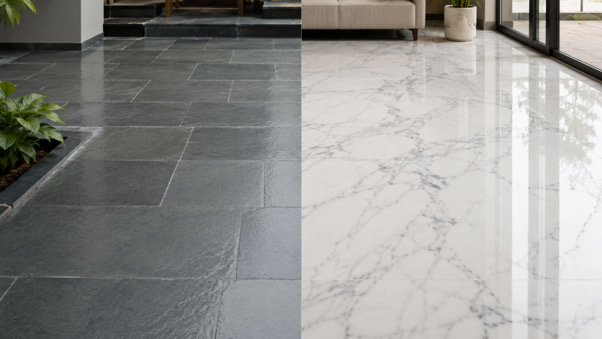
Choosing the right flooring material is one of the biggest decisions homeowners, builders, and architects face during construction or renovation. Two of the most popular natural stone options in India are Kota Stone and Marble. While marble is often associated with luxury and elegance, Kota Stone has earned a reputation for durability, affordability, and low maintenance. This blog compares Kota Stone and Marble across cost, durability, maintenance, aesthetics, and application, helping you make an informed decision for your next project.
Kota Stone is more durable, water-resistant, slip-resistant, and budget-friendly than marble, making it ideal for homes, offices, and high-traffic areas. Marble offers superior aesthetics and a premium look but requires more maintenance and is costlier. For long-term value and practicality, Kota Stone is generally the better flooring choice, especially in Indian climates.
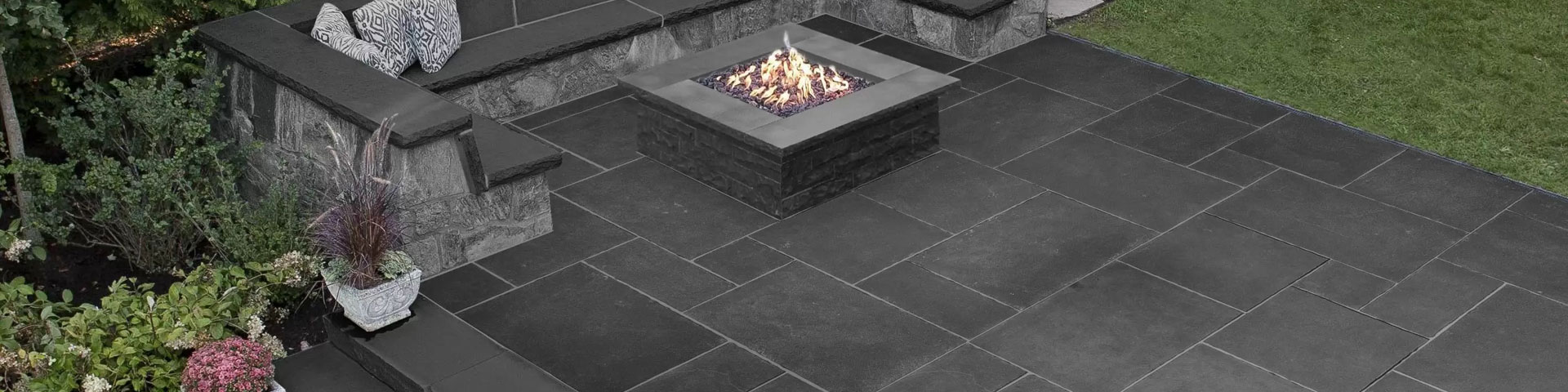
Kota Stone is a fine-grained limestone quarried primarily in Kota, Rajasthan. It is widely used across India for flooring, cladding, and paving due to its natural strength and versatility. Kota Stone is available in several shades, including Kota Blue Stone, Kota Brown Stone, and Kota Black Stone, each offering a distinct look while retaining the same structural benefits.
Builders and architects favor Kota Stone because it performs well in India's varied climate, resists wear from daily foot traffic, and requires minimal upkeep compared to other natural stones.
Marble is a metamorphic rock known for its veined patterns and glossy finish. It is quarried in regions like Rajasthan (Makrana marble) and Italy (Carrara marble), and has long been used in palaces, temples, and luxury homes for its elegant appearance. Marble is prized for its aesthetic value but is comparatively softer and more porous than stones like Kota Stone.
| Feature | Kota Stone | Marble |
|---|---|---|
| Durability | Very high, resistant to scratches and wear | Moderate, prone to scratching |
| Water Absorption | Low, naturally water-resistant | Higher, porous surface |
| Maintenance | Low, easy to clean | High, requires regular sealing and polishing |
| Cost | Budget-friendly | Premium pricing |
| Slip Resistance | Good, especially honed finish | Can be slippery when polished |
| Aesthetic Appeal | Natural, earthy tones | Elegant, luxurious veining |
| Best For | Homes, offices, courtyards, commercial spaces | Living rooms, luxury interiors, statement flooring |
| Climate Suitability | Excellent for Indian weather conditions | Sensitive to heat and moisture in some varieties |
Kota Stone is a dense limestone that develops a natural sheen over time with minimal maintenance. It withstands heavy foot traffic, making it a preferred choice for schools, offices, hospitals, and commercial establishments. Its natural composition makes it resistant to chipping and cracking under normal use.
Marble, while visually stunning, is a softer stone. It is more susceptible to scratches, etching from acidic substances, and cracks under heavy impact. High-traffic areas with marble flooring often show wear marks sooner than Kota Stone.
One of the most significant factors influencing flooring decisions is budget. Kota Stone is significantly more affordable than marble, both in terms of material cost and installation. This makes it an excellent option for large-scale projects, budget-conscious homeowners, and commercial developments where cost efficiency matters.
Marble, especially imported varieties like Italian marble, can be considerably more expensive due to quarrying, transportation, and processing costs. While marble adds a luxurious touch, it may not always be practical for large areas or tight budgets.
Kota Stone requires simple maintenance routines. Regular sweeping and occasional mopping with mild cleaning agents keep it looking polished for years. It does not require frequent sealing, unlike more porous stones.
Marble, on the other hand, demands more careful upkeep:
For homeowners and businesses seeking low-maintenance flooring, Kota Stone offers a practical advantage.
Marble is often chosen for its timeless elegance, unique veining patterns, and glossy finish, making it a popular choice for luxury homes, hotel lobbies, and statement interiors.
Kota Stone, while more understated, offers a natural, earthy aesthetic available in shades like Kota Blue Stone, Kota Brown Stone, and Kota Black Stone. It pairs well with both traditional and contemporary architectural styles, and its matte or honed finish provides a sophisticated, grounded look that many architects and interior designers appreciate for its versatility.
Kota Stone naturally has low water absorption, making it highly suitable for:
Marble is more porous and can absorb liquids if not sealed properly, leading to staining over time. This makes marble less ideal for kitchens, bathrooms, or outdoor applications unless treated with high-quality sealants.
When deciding between Kota Stone and Marble, consider the following factors:
Working with a trusted supplier like Maruti Stone Suppliers ensures you receive quality-assured, well-processed natural stone suited to your project needs.
Both Kota Stone and Marble bring distinct advantages to a project. Marble delivers unmatched luxury and visual drama, while Kota Stone offers superior durability, water resistance, and cost efficiency—making it the more practical choice for most Indian homes, commercial spaces, and outdoor applications. For projects where long-term performance and budget matter most, Kota Stone stands out as the smarter flooring investment.
If you're planning a construction or renovation project, Maruti Stone Suppliers offers premium-quality Kota Stone, Kota Blue Stone, Kota Brown Stone, Kota Black Stone, Red Mandana Stone, Sandstone, and Limestone, sourced and processed to the highest standards. Contact Maruti Stone Suppliers today to get expert guidance, competitive pricing, and reliable delivery for your next flooring project.
1. Is Kota Stone better than marble for flooring?
Kota Stone is generally more durable, water-resistant, and affordable than marble, making it better suited for high-traffic and moisture-prone areas. Marble is preferred for its luxurious appearance in low-traffic, decorative spaces.
2. Which is cheaper, Kota Stone or Marble?
Kota Stone is significantly more budget-friendly than marble, both in material cost and installation, making it ideal for large-scale or cost-sensitive projects.
3. Is Kota Stone suitable for outdoor flooring?
Yes, Kota Stone's low water absorption and high durability make it an excellent choice for courtyards, walkways, and outdoor paving.
4. Does Kota Stone need polishing like marble? Kota Stone requires minimal polishing and develops a natural sheen with regular use and basic maintenance, unlike marble, which often needs professional polishing.
5. Is marble more slippery than Kota Stone?
Polished marble can become slippery, especially when wet, while Kota Stone (particularly in honed finish) offers better slip resistance.
6. Which stone lasts longer, Kota Stone or Marble?
Kota Stone typically lasts longer in high-traffic and outdoor conditions due to its density and resistance to scratches and staining compared to marble.
7. Can Kota Stone be used in bathrooms?
Yes, Kota Stone's natural water resistance makes it a practical and popular choice for bathroom flooring.
8. What colors are available in Kota Stone?
Kota Stone is available in multiple shades, including Kota Blue Stone, Kota Brown Stone, and Kota Black Stone, offering flexibility for different design styles.
9. Is marble a good investment for Indian homes?
Marble can add aesthetic value, but its higher maintenance needs and sensitivity to humidity make it less practical for certain regions compared to Kota Stone.
10. Where can I buy high-quality Kota Stone?
Maruti Stone Suppliers offers premium Kota Stone and other natural stone products, ensuring quality, consistency, and reliable supply for residential and commercial projects.